Include future use in the brief
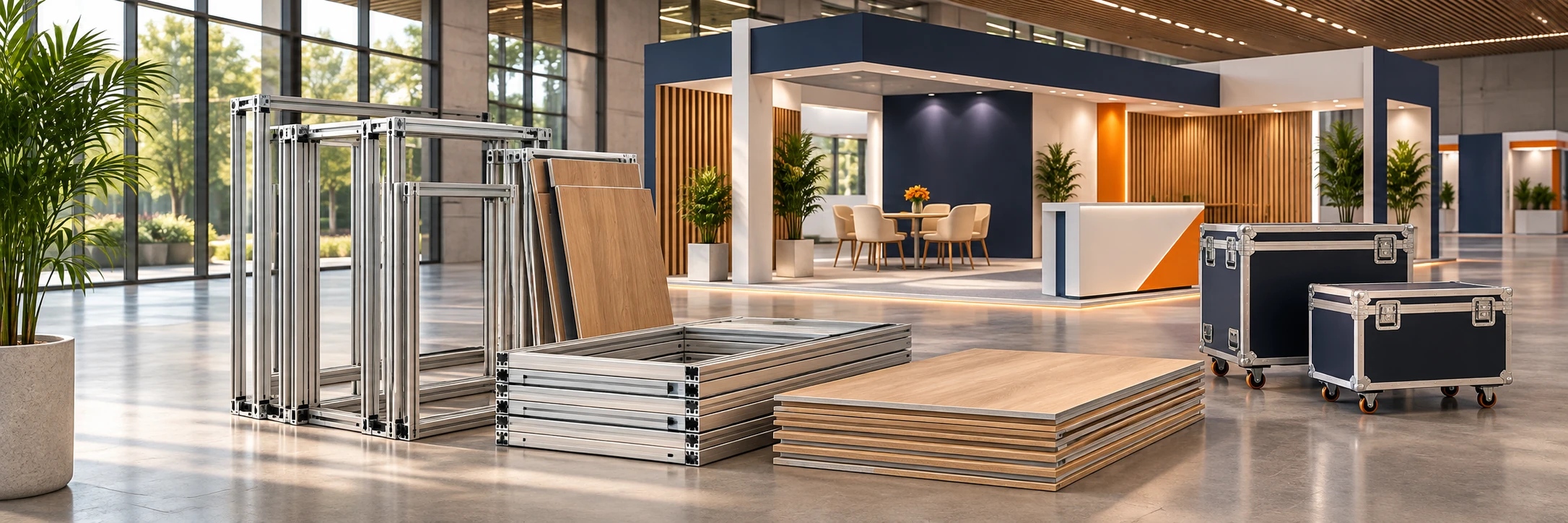
Compare stand sizes, transport routes and presentation needs across planned events. A modular system is useful when its parts work in future layouts. Ask about repair, separation and reuse instead of relying on a green or modular label.
Plan graphics separately from structure
The message may change between editions without replacing the whole structure. Ask the designer to identify replaceable elements. Record print sizes, installation methods and storage needs, and check materials against venue requirements, intended use and budget.
Assign responsibility for dismantling
Before opening, agree the component list, packing, storage location and receiving owner. After the event, record reusable items, repairs and waste separately. This gives the next team a practical inventory and helps avoid environmental claims that have not been measured.
Working with Nikatis
Nikatis encourages prefabricated and reusable stand options. Share your space, future-event plans and venue constraints with the design team. The design, service scope and cost are determined after reviewing your requirements.
An example brief for multiple events
Consider a company attending two events with different stand sizes. Ask the designer to distinguish shared parts from optional additions. Product displays, conversation areas and storage should work in both layouts. Give each shared component an identifier in the drawing and handover list. Reuse plans can fail in practice if no one has agreed where parts will be stored or who will look after them.
Practical example
Ask for three separate groups in the proposal: reusable items, per-event consumables, and transport/storage costs. Compare options using the same service scope.
What to record after the event
Keep a simple dismantling report: what entered storage, what was damaged, what needs repair and what is missing. Condition photos help the next decision. Environmental performance claims need a baseline and measurement method; retained components alone do not establish a specific carbon reduction. Useful improvement starts with trackable, repeatable decisions rather than a decorative label.