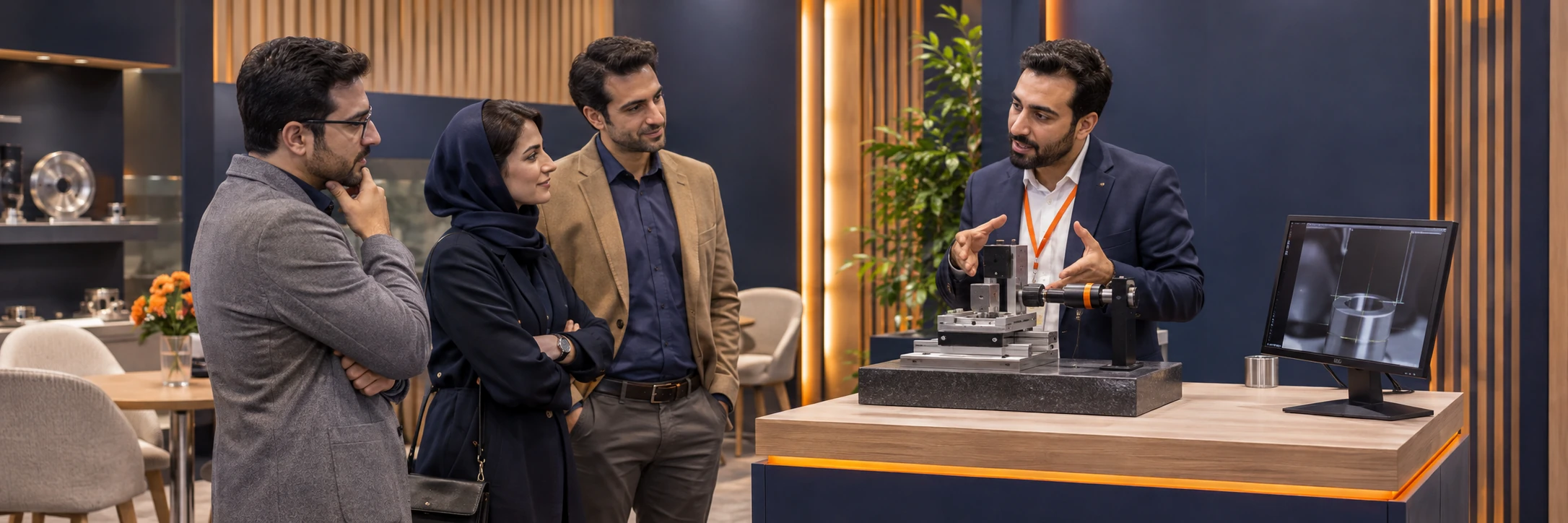
A busy stand leaves little time to explain every feature. Choose an audience, a real problem and an outcome visitors can see or understand. This practical Nikatis outline can be adapted to automotive components, industrial equipment or technical services.
1. Start with the visitor’s problem
Before choosing a sample, decide whether the visitor is a buyer, distributor or technical specialist. Prepare an opening question for each group. If the need is shorter servicing time, focus on the service process and tools; save the full catalogue for the next conversation.
2. Build a three-minute scenario
As a rehearsal format, allow 30 seconds for the problem, 90 for the demonstration, 30 for the outcome and 30 for a next-step question. These are suggested timings. For complex equipment, separate the short introduction from a longer technical session.
Practical example
For a diagnostic device, explain a diagnostic challenge, show one sample workflow, then ask which vehicle or use case the visitor wants to assess.
3. Make the outcome verifiable
Choose a cutaway, physical component, screen or simulation to suit the objective. Explain test conditions and limitations when using numbers, comparisons or recorded tests. Identify simulations as such, and record unanswered questions for technical review.
4. Coordinate space and technical needs
Mark viewing positions, sightlines, circulation and waiting space on the stand plan. Check power, audio, connectivity and equipment operation against that event’s manual. Rehearse under realistic conditions before visitors arrive, and prepare offline content for connection failures.
5. End with an agreed next step
Instead of ending with “read the catalogue”, ask what information would support the visitor’s next decision. Agree a specification sheet, compatibility check, technical meeting or sample discussion. Record the product, use case, key question, response owner and agreed timing with the contact.
Further reading
Further reading. The steps and examples in this article are practical suggestions from Nikatis Editorial.